A 49 yo patient with a history of asthma and anaphylaxis presents to the emergency department with increasing SOB. She has been treated by ambulance staff with Salbutamol and ipratropium, with some improvement.
On presentation to the emergency department the SOB is worsening and this is considered to be anaphylaxis, although no trigger is known. The patient is treated with 0.5mg adrenaline IM.
Following some further salbutamol, she is improving but then develops severe difficulty breathing. A further dose of adrenaline is given. The patient then develops chest tightness and a tachy-arrhythmia is noticed on the monitor.
The rhythm changes into different morphologies. She is haemodynamically stable.
The decision is made to DCR the patient, however the patient self reverts into a sinus tachycardia. The potassium which on presentation was 3.4 mmol/L, is now 2.5 mmol/L.
The treating team commenced an Amiodarone infusion.
Some Questions
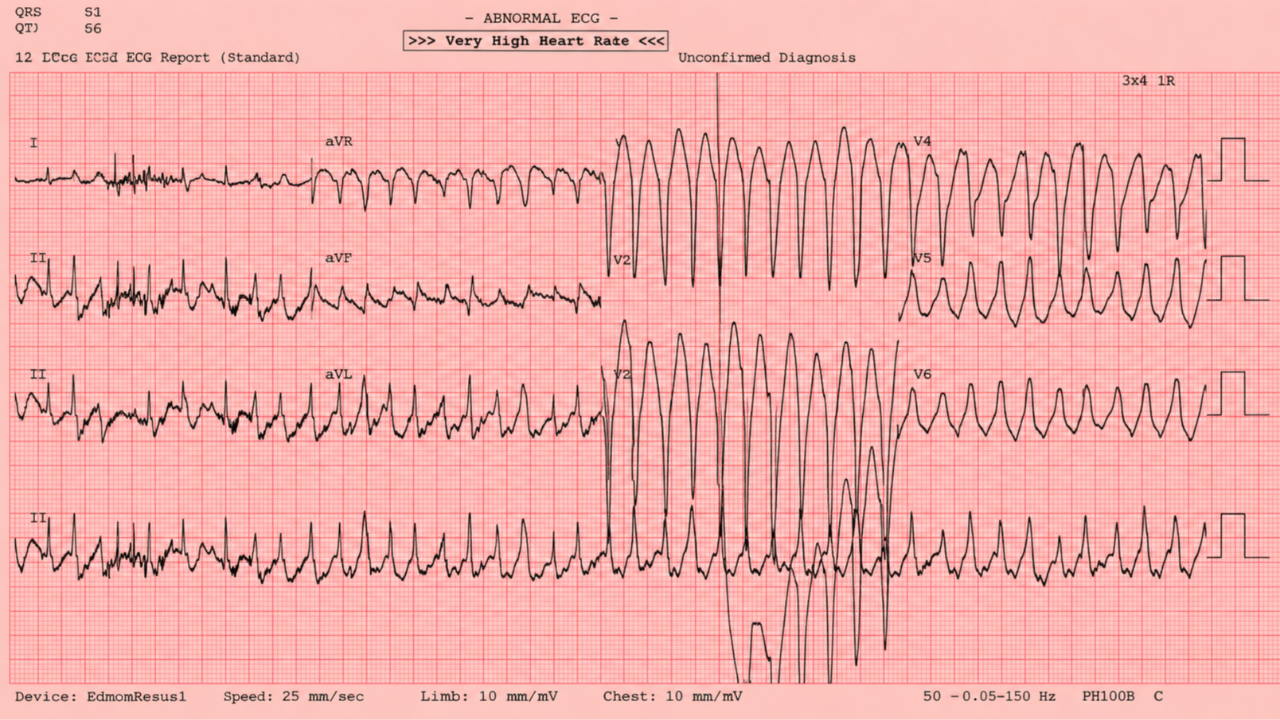
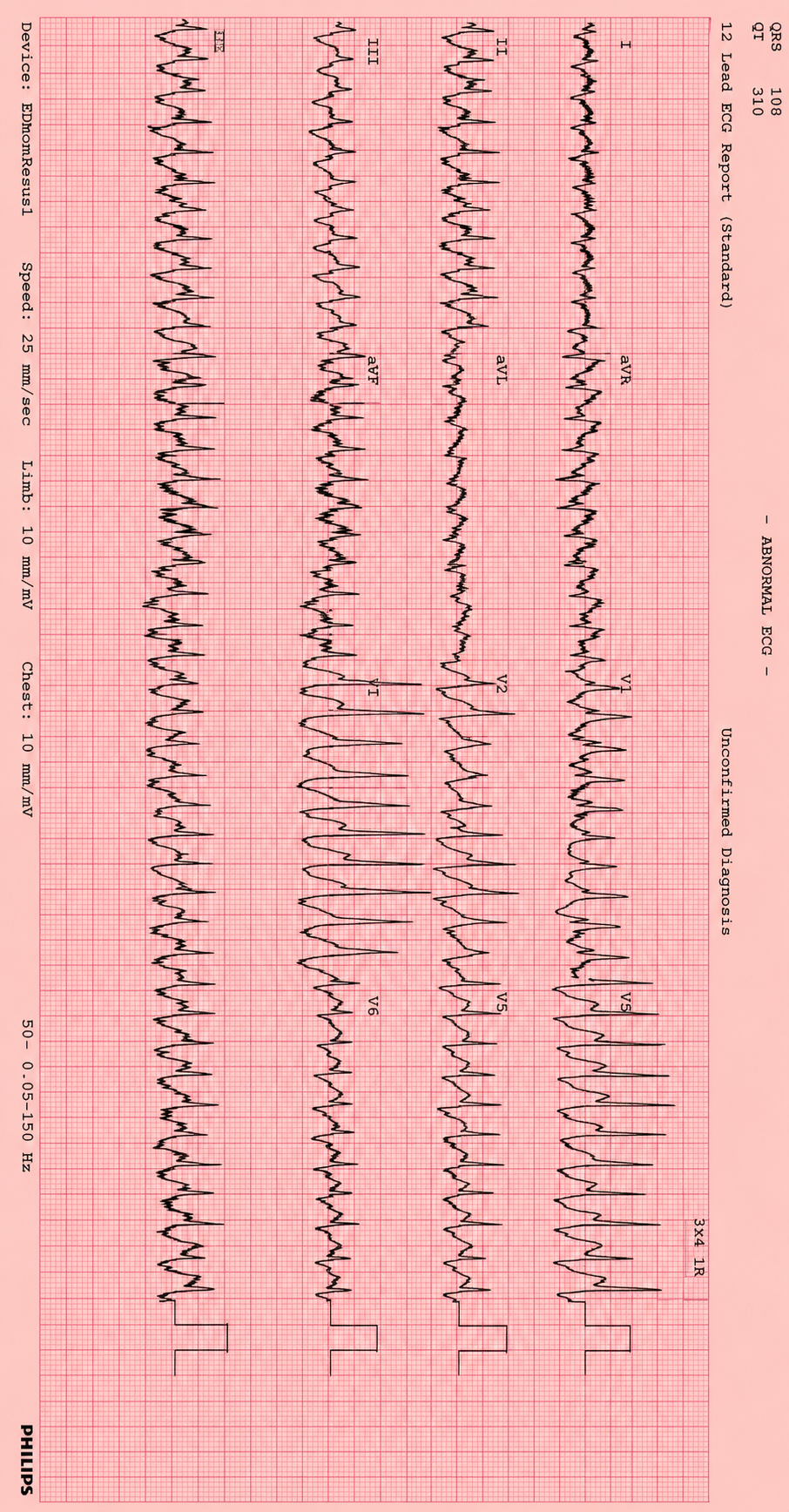
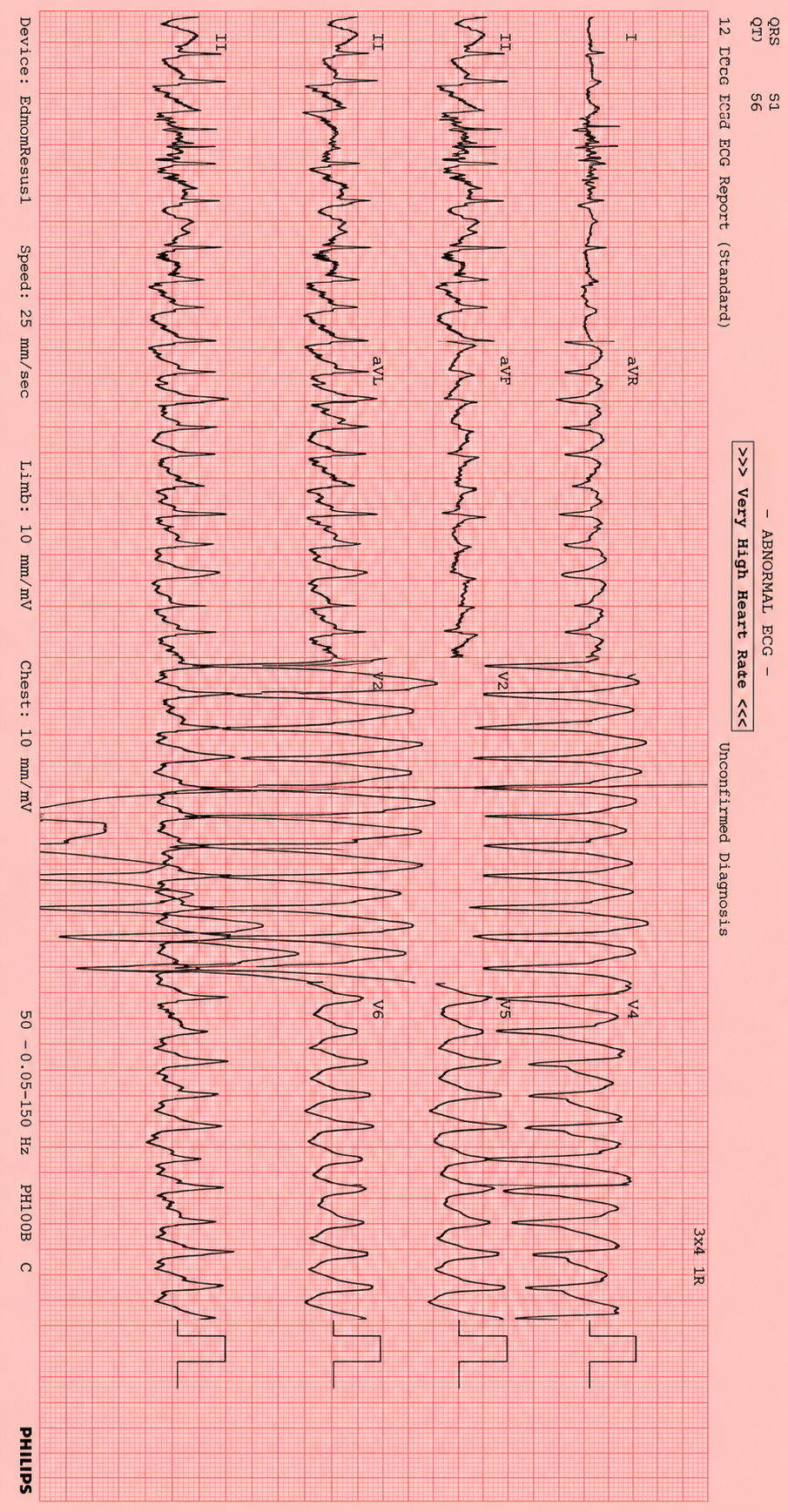
- What does ECG 1, ECG 2 and ECG 3 show?
- What is the likely cause?
- How would you treat?
Answers below.
What does ECG 1 show?
(a) VT
(b) AF with WPW
(c) AF
(d) Atrial Flutter with a RBBB
(e) SVT with Aberrancy
(f) Atrial Flutter with a LBBB
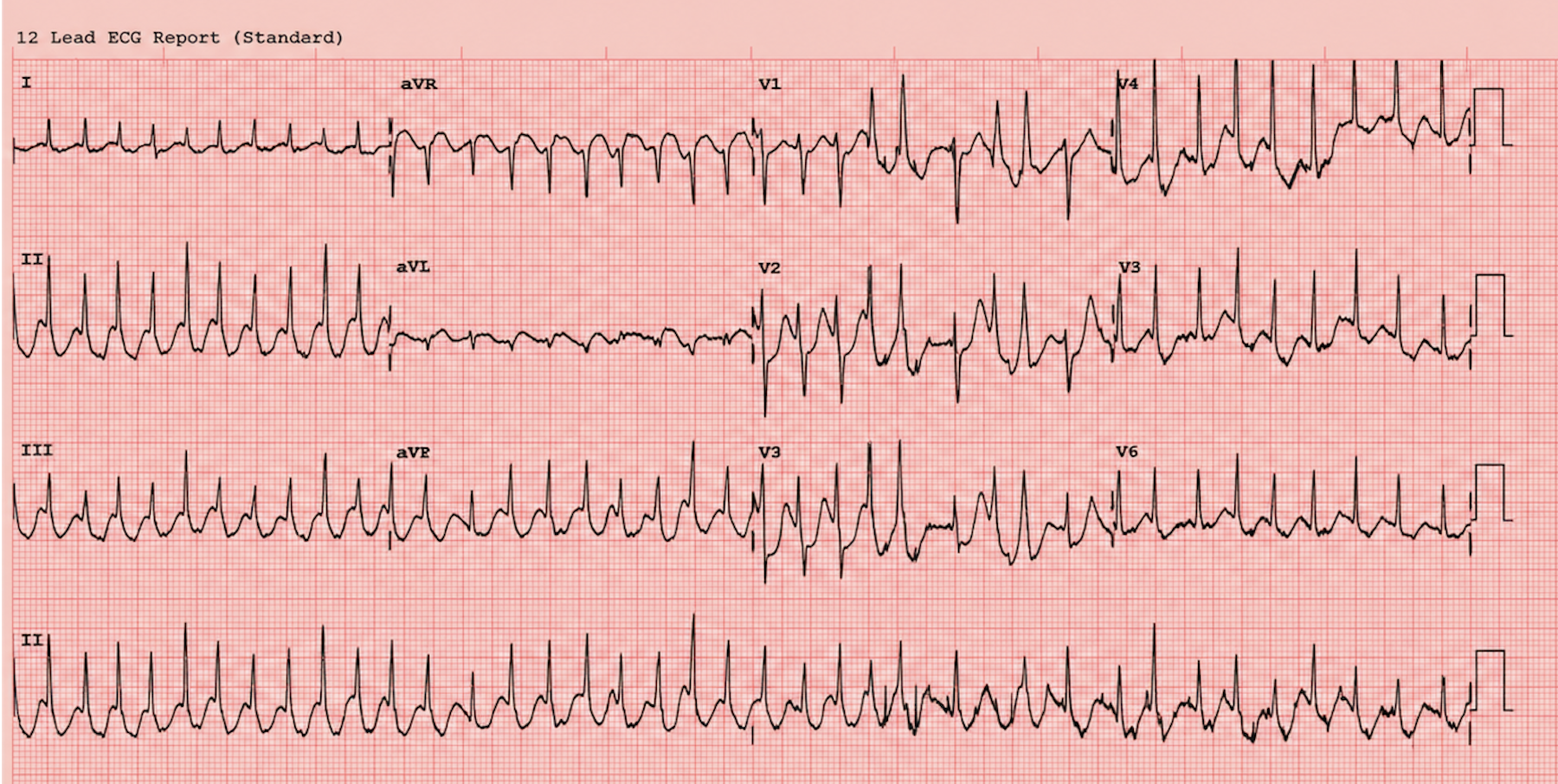
What does ECG 2 show?
a) VT
(b) AF with WPW
(c) AF
(d) Atrial Flutter with a RBBB
(e) SVT with Aberrancy
(f) Atrial Flutter with a LBBB
What does ECG 3 show?
a) VT
(b) AF with WPW
(c) AF
(d) Atrial Flutter with a RBBB
(e) SVT with Aberrancy
(f) Atrial Flutter with a LBBB
ANSWERS
1. c
2. d
3. f
The arrhythmia appears to have occurred secondary to a combination of Salbutamol and a Potassium shift that both salbutamol and adrenaline can cause.
Salbutamol is a beta adrenergic stimulator that is known to increase heart rate as well as the potential for arrhythmias. It can stimulate beta-1 receptors in the heart, lower potassium and increases sympathetic outflow, reducing cardiac refractory times.
It can cause:
- sinus tachycardia and atrial tachycardias
- Atrial fibrillation- where hypokalaemia can contribute.
- Ventricular tachycardia/fibrillation, although these are less common.
Treatment would include:
- Potassium top up
- Decreasing Salbutamol use
- Diltiazem 180mg PO was commenced
Would you anticoagulate this patient?
The patient has a CHA₂DS₂-VASc score of 1 ( because female)
The recommendations are not for anticoagulation if a sexless score of 0 is achieved. The recommendation is anticoagulation benefits patients with a sexless score > 0. (Read the related NEJM article here on Literature rounds)
This patient was commenced on a DOAC, for the episodes of AF she was in. This was to continue for 4 weeks until cardiology review.
Recovery was uneventful.